Made in China questions the mercantile and disposable paradigm of objects and its tension with cultural identity. This body of work examines the far-reaching effects of consumerism and mass production, reflecting on how indigenous communities around the world experience the erosion of their cultural heritage in the face of ethnocentrism, globalization, and industrialization.
This global issue, perpetuated by consumer demand, not only devastates the environment but disproportionately impacts marginalized communities, those who have historically preserved the diversity and richness of cultural traditions. Through this project, I explore the intersections of commerce, cultural erasure, and environmental consequence, highlighting how the forces of industrialization and global consumption threaten both identity and heritage.
 |
屁 is for دۇئا but also for ئولجى / P is for Duya but also for Yolji “P is for Pray but also for Prey” 48" x 60" |
 |
西 is for كېۋەز / C is for Kéwez “C is for Cotton” 48" x 60" |
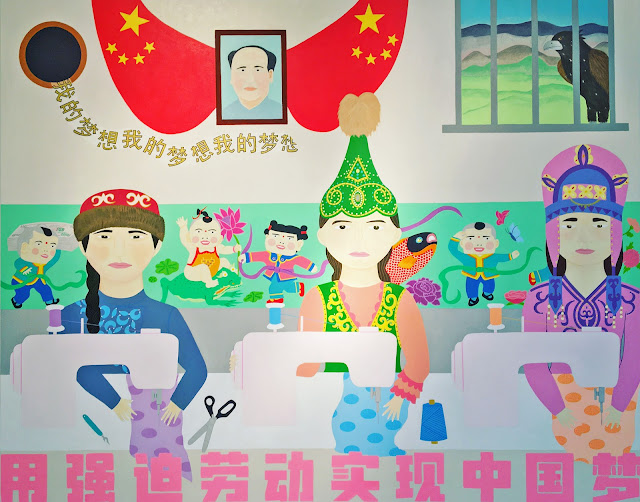 |
艾娜 is for جامان تۉش / N is for Jaman tüş “N is for Nightmare” 48" x 60" |
Made in China began as an ongoing project of handmade reverse appliqués inspired by Molas, unique, hand-sewn, illustrated fiber artworks created by Guna women from Colombia and Panamá. Molas depict elements of their cosmogony and are integral to the women’s traditional attire. In my version of Molas, I depict common consumer goods, typically mass-produced in China. The project seeks to highlight the contrast between mass production and the hand-crafted traditions of indigenous peoples worldwide, emphasizing how the value placed on speed and consumption undermines cultural heritage and environmental stewardship.
Thirst is the first piece I was able to complete using the hand-sewn technique of Molas. I created it as a statement on the plight of indigenous communities deprived of water, medical care, and other basic necessities. In the Colombian Guajira, Wayuu children continue to die from thirst and malnourishment, while society at large remains focused on material acquisition. Large corporations offer financial incentives to government officials to obtain permits to exploit ancestral lands historically cared for by indigenous communities. This activity results in droughts, ecological imbalance, and the targeted killings of indigenous leaders and activists, profits that can never compensate for the environmental and cultural losses incurred. Across the globe, indigenous communities often demonstrate profound ecological stewardship, yet their human rights and sovereignty are persistently violated.

口渴 Kǒu kě / Thirst (2018)
(Mola) Reverse appliqué
20”x27”

球鞋 Qiúxié / Sneakers (2018)
(Mola) Reverse appliqué
14” x 17.75”

搅拌机 Jiǎobànjī / Blender (2019)
(Mola) Reverse appliqué
14” x 18”

缝纫机 Féngrènjī / Sewing Machine (2020)
(Mola) Reverse appliqué
17.5” x 20.5”

无人驾驶飞机 Wú rén jiàshǐ fēijī / Drone (2020)
(Mola) Reverse appliqué
17.5” x 21”

服饰 Fúshì / Apparel (2020)
(Mola) Reverse appliqué
20” x 24.85”
 |
美发产品 Měifǎ chǎnpǐn / Hair Products (2020) (Mola) Reverse appliqué 13.25” x 29” |
 |
手机 Shǒujī / Smartphone (2020) (Mola) Reverse appliqué 14.6” x 28.5” |
 |
哆啦A梦新番 Duō lā A mèng xīn fān / Doraemon (2020) (Mola) Reverse appliqué 19.25” x 14” |
 |
迷宫 Mígōng / Maze (2020) (Mola) Reverse appliqué 18” x 20.75”  高跟鞋 Gāogēnxié / High Heels (2020) (Mola) Reverse appliqué 14.5” x 17.5”  指尖陀螺 Zhǐ jiān tuóluó / Fidget Spinner (2020) (Mola) Reverse appliqué 19.5” x 21.5”  晚礼服 Wǎn lǐfú / Cocktail Dress (2020) (Mola) Reverse appliqué 19.5” x 13”  钱包 Qiánbāo / Purse (2020) (Mola) Reverse appliqué 13.5” x 19.75” The series Idols was inspired by the aesthetics of Pre-Hispanic cultures. Each piece was created using mixed media on repurposed “Made in China” toys and appliances that had been discarded by their owners. The finished figures are designed to appear as if they were carved from rock, an enduring natural material; however, in reality, these idols are fragile and could easily break, revealing the man-made objects beneath. Each idol is named in Runasimi, also known as Quechua, one of the indigenous languages still spoken in the Andes Mountains since pre-colonial times. |
This series interrogates the idolatry of consumerism, our tendency to seek support or fulfillment through objects, and raises awareness of how culture and tradition are increasingly replaced by ephemeral, mass-produced goods.
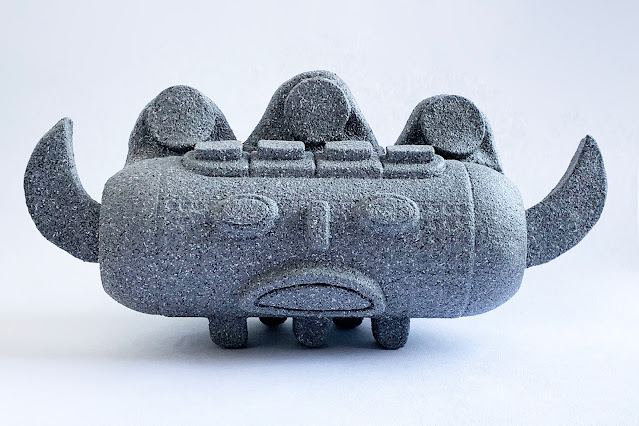 |
Álli wíyaqoq (2020) In Quechua: A person that listens, that obeys. Mixed media on repurposed toy bluetooth speaker. 5” x 10.5” x 3.25” |
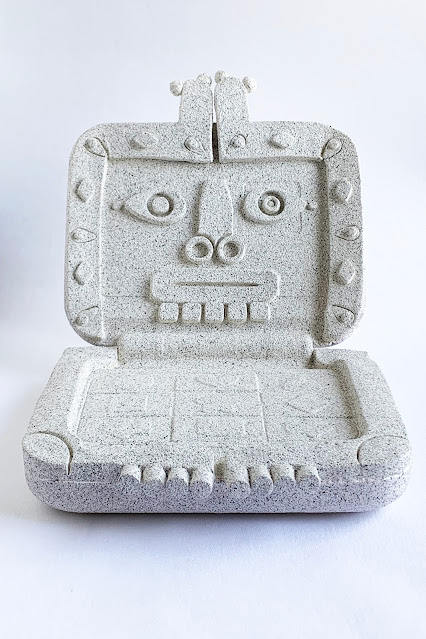 Kawsaqi (2020) In Quechua: Coworker. Mixed media on repurposed toy laptop. 8” x 8” x 11” |
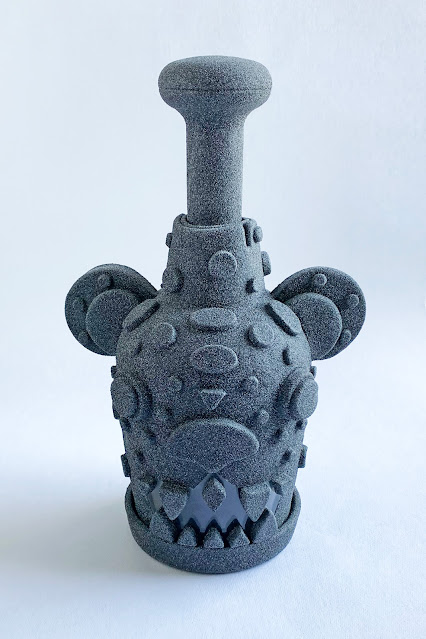 |
Uturunku (2020) In Quechua: Jaguar. Mixed media on repurposed manual chopper. 9.5” x 6” x 4” |
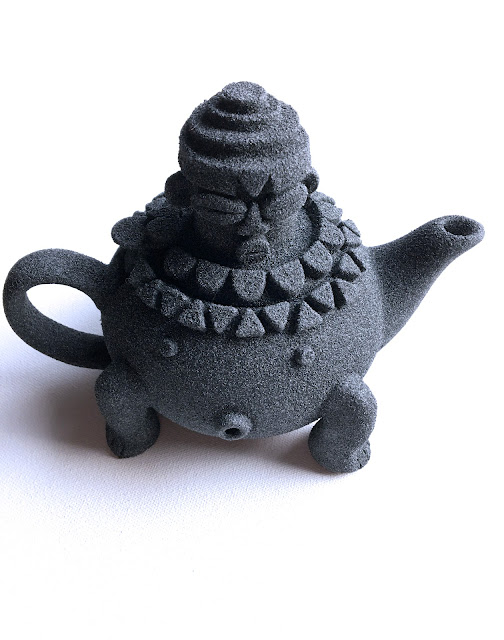 Chíchu wármim tékan (2020) In Quechua: A pregnant woman is sitting. Mixed media on repurposed teapot. 5.5” x 7.5” x 5”  Tzípyan (2020) In Quechua: She organizes, tidies up. Mixed media on repurposed toy purse. 11” x 11.5” x 4”
|
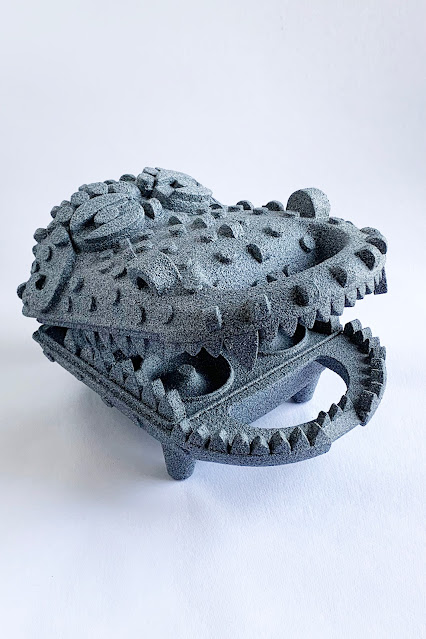 |
Chariy (2020) In Quechua: To trap, to capture to hold. Mixed media on repurposed doughnut maker. 6.25” x 6.25” x 8.75” |
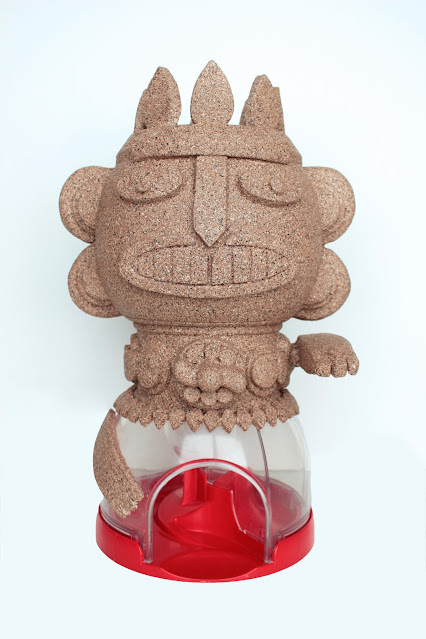 |
Astah (2020) In Quechua: Transporter. Mixed media on repurposed toy gum ball machine. 13.5” x 9” x 6.5” |


